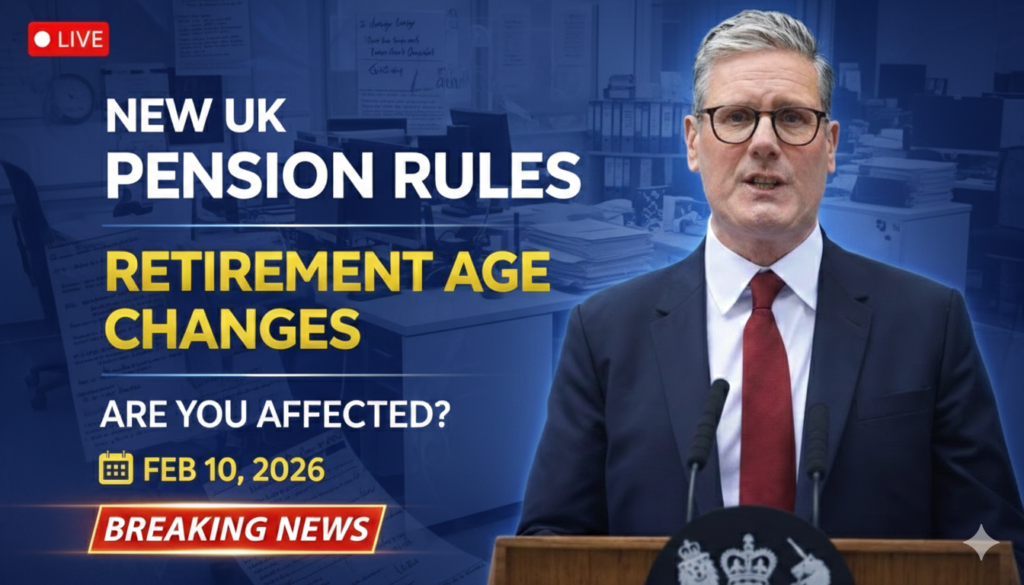
Hello Everyone, The UK government’s announcement of new pension rules for 2026 has sparked widespread discussion across the country. Millions of workers and future retirees are now reassessing their plans as changes to the retirement age come into focus. For many, retirement is not just a financial milestone but a deeply personal one, tied to health, family, and long-term security. The update has raised concerns, especially among those who believed their retirement timeline was already fixed. While the government frames the move as necessary, the public response shows just how sensitive pension changes remain.
Why the Retirement Age Matters
The State Pension age determines when people can access a key source of guaranteed income. Any adjustment, even a small one, can significantly affect household finances. Many UK workers plan their careers, savings, and even housing decisions around an expected retirement age. When that expectation shifts, it can feel unsettling. For those in physically demanding jobs or with health issues, working longer may not be realistic. This is why changes to pension rules often attract strong reactions and intense public scrutiny.
What Has Changed in 2026
Under the new pension rules, the government has confirmed adjustments to the long-term retirement age framework. While not everyone will be affected immediately, future retirees will notice the impact most. The aim is to reflect longer life expectancy and manage public spending pressures. However, critics argue that rising living costs and health inequalities make a higher retirement age difficult for many. The change reinforces the importance of forward planning, as relying solely on the State Pension may no longer match personal retirement expectations.
Who Is Most Affected
The changes are expected to affect people currently in their 40s and 50s the most. These individuals are close enough to retirement to feel the impact, yet still have limited time to adjust plans. Younger workers are also affected, though the change may feel distant to them. Women and lower-income workers often feel pension changes more sharply due to career breaks or lower lifetime earnings. The update highlights long-standing inequalities within the pension system that remain unresolved.
Government’s Reasoning
The government has defended the update by pointing to demographic trends. People are living longer, and the cost of funding pensions continues to rise. Without adjustments, officials argue, the system could become unsustainable. The update is presented as a preventative measure rather than a sudden cut. However, many pensioners and advocacy groups feel that financial sustainability should not outweigh fairness. The challenge lies in balancing economic reality with the lived experiences of ordinary UK workers approaching retirement.
Public Reaction Across the UK
Reaction to the announcement has been mixed, but concern dominates public discussion. Many people feel caught off guard, especially those who believed previous assurances about pension age stability. Trade unions and pension groups have voiced worries about the human cost of working longer. Social media discussions reflect frustration, anxiety, and confusion. At the same time, some accept the logic behind the change, acknowledging that the system must adapt. This divide shows how complex and emotionally charged pension reform remains.
Impact on Retirement Planning
The update forces many people to rethink their retirement strategy. Plans built around a specific age may now need adjustment. Some workers may consider saving more, while others may look at part-time work later in life. For those already struggling with rising costs, additional saving may not feel realistic. The change highlights the growing gap between policy decisions and personal financial realities. Retirement planning in the UK is becoming more complex, making early awareness more important than ever.
State Pension and Private Savings
The State Pension alone is rarely enough to support a comfortable retirement. With changes to the retirement age, private pensions and savings become even more important. Workers who delay retirement may contribute for longer, but they also face higher living costs. The update encourages people to review workplace pensions, personal savings, and long-term goals. For many, this may be the first time they actively reassess whether their current savings strategy is truly sufficient.
Key Groups to Watch
Certain groups will need to pay closer attention to how the new rules affect them.
- Workers approaching State Pension age within the next decade
- Individuals with health conditions or physically demanding jobs
These groups may face the toughest adjustments and should consider seeking tailored guidance to understand their options fully.
What Workers Can Do Now
Although the changes may feel overwhelming, there are practical steps people can take. Understanding your expected State Pension age is a good starting point. Reviewing pension statements and checking contribution records can also help. Small changes made early can have a meaningful impact later. While not everyone can save more, being informed allows better decision-making. Staying engaged with official updates ensures there are no surprises closer to retirement.
Common Misunderstandings
One common misconception is that the retirement age change applies equally to everyone immediately. In reality, changes are usually phased in over time. Another misunderstanding is that State Pension age and workplace pension access are the same, which they are not. Confusion around these points adds to public anxiety. Clear information is essential, as misinformation can lead people to make poor financial choices based on incorrect assumptions.
Role of Employers
Employers also play a role in how workers experience these changes. Flexible working arrangements and later-life career options can ease the pressure of working longer. Some employers are already adapting policies to support older workers. However, not all sectors offer the same flexibility. The update raises questions about whether workplaces are truly prepared for an ageing workforce. Supporting older employees will become increasingly important as retirement ages shift.
Support and Advice Available
Reliable advice can help people navigate the new rules. Free guidance services and official government tools are available to explain pension age changes and retirement options.
- Government pension forecast services
- Independent guidance organisations offering retirement planning support
Using trusted sources reduces confusion and helps people make informed decisions rather than reacting out of fear.
Looking to the Future
The 2026 update may not be the final change to UK pension rules. As economic conditions and life expectancy continue to evolve, further reviews are likely. This uncertainty makes long-term planning more challenging. However, it also reinforces the importance of adaptability. People who stay informed and flexible are better placed to respond to future changes without panic. The pension system is evolving, and public awareness must evolve with it.
Conclusion
The new UK pension rules for 2026 mark a significant shift that will affect millions of current and future retirees. While the government emphasises sustainability, many individuals feel anxious about working longer and delaying retirement. Understanding the changes, reviewing personal plans, and seeking reliable guidance are essential steps. Although the update may feel shocking, informed preparation can help reduce uncertainty and allow people to approach retirement with greater confidence.
Disclaimer: This article is for informational purposes only and does not constitute financial, legal, or retirement advice. Pension rules and eligibility criteria may change, and individual circumstances differ. Readers should consult official UK government sources or qualified financial advisers before making decisions related to retirement or pension planning.