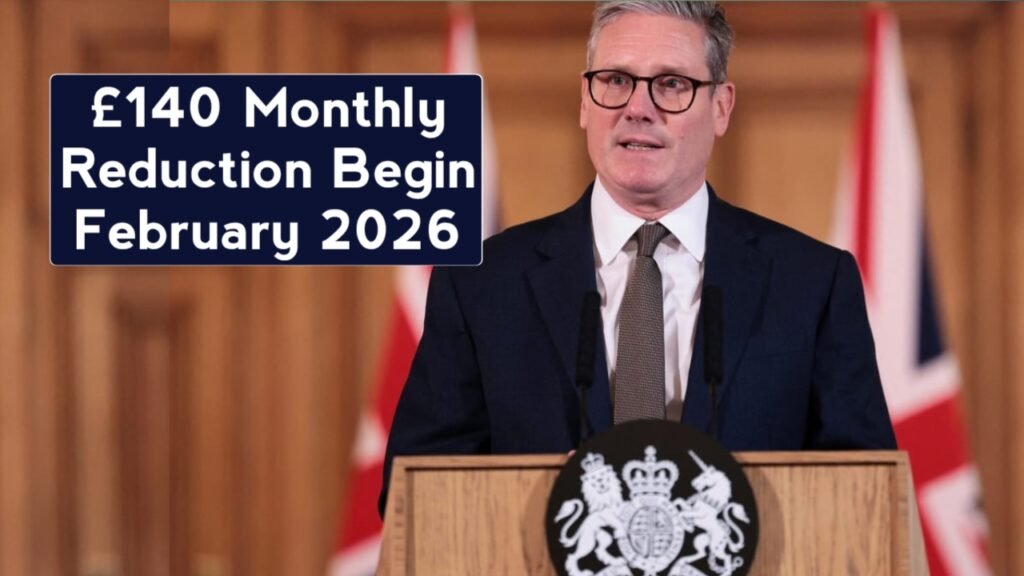
Hello Everyon, From February 2026, many UK households are expected to feel a noticeable change in their monthly finances following an official government update confirming a £140 monthly reduction. This announcement has sparked concern across the country, particularly among pensioners, benefit claimants, and low-income families already managing rising living costs. While the government describes the change as part of a wider financial adjustment, for ordinary people it represents a real reduction in day-to-day support. Understanding what this update means, who it affects, and how to prepare is now essential for millions across the UK.
What the £140 Monthly Reduction Means
The £140 monthly reduction refers to a cut in regular government support payments beginning in February 2026. This change does not apply to a one-off payment but instead affects monthly income, making its impact more significant over time. For many households, this reduction may alter budgeting decisions, savings plans, and spending priorities. The government has stated that the adjustment aligns with broader fiscal policies, yet for recipients, it may feel sudden and difficult to manage. Knowing where the reduction applies is crucial to avoiding financial surprises.
Why the Government Introduced This Change
According to official statements, the reduction is linked to long-term budget restructuring and efforts to control public spending. Rising costs across healthcare, pensions, and public services have placed pressure on government finances. Officials argue that adjusting monthly support levels helps maintain economic balance while redirecting funds to priority areas. However, critics say the timing is challenging, especially as households continue to face high energy bills and food prices. The debate highlights the tension between economic policy and everyday financial realities faced by UK residents.
Who Is Likely to Be Affected
Not every UK resident will experience this £140 monthly reduction. The impact depends on benefit type, income level, and eligibility criteria. Those relying heavily on government support may notice the change most.
- Pensioners receiving certain income-linked benefits
- Low-income households on ongoing support schemes
- Individuals receiving long-term assistance payments
These groups may need to reassess their finances carefully. The government has advised affected individuals to check official communications to confirm whether the reduction applies to them.
Impact on Household Budgets
For many families, a £140 monthly reduction is not a small adjustment. Over a year, it adds up to a substantial loss of income. Households may need to cut back on non-essential spending, delay payments, or reduce savings contributions. This is particularly concerning for pensioners living on fixed incomes, where flexibility is limited. Financial pressure may also affect mental wellbeing, especially for those already struggling. The change reinforces the importance of careful budgeting and seeking guidance where possible to avoid falling into financial difficulty.
February 2026 Timeline Explained
The government has confirmed that the reduction will officially take effect from February 2026. Payments issued before this date will remain unchanged. From that month onward, eligible recipients will see the adjusted amount reflected in their statements. Authorities have stated that notifications will be issued in advance, giving people time to prepare. However, past experience suggests some individuals may still be caught off guard. Monitoring official letters and online accounts will be essential to understanding exactly when and how the reduction applies.
Public Reaction Across the UK
Public response to the announcement has been mixed, with many expressing concern and frustration. Advocacy groups argue that vulnerable citizens are being asked to shoulder the burden of economic adjustments. Online forums and community discussions show widespread anxiety about coping with reduced income. Others acknowledge the government’s financial challenges but question whether sufficient safeguards are in place. The reaction highlights a growing demand for transparency and clear communication, especially when changes directly affect people’s livelihoods and financial security.
Government Support and Guidance
The government has stated that support will remain available for those facing hardship due to the reduction. While the monthly amount is decreasing, officials emphasise that additional assistance schemes and advisory services continue to operate.
- Access to budgeting and financial advice services
- Eligibility checks for alternative or supplementary benefits
These measures aim to soften the impact, though critics argue they may not fully offset the loss. The effectiveness of this support will become clearer after implementation.
How Individuals Can Prepare
Preparing for the £140 monthly reduction starts with awareness and planning. Reviewing current income and expenses can help identify areas where adjustments may be needed. Some households may choose to build a small financial buffer before February 2026. Seeking independent financial advice can also provide clarity, especially for pensioners and those with complex benefit arrangements. While preparation cannot remove the impact entirely, it can reduce stress and help people regain a sense of control over their finances.
Wider Economic Implications
Beyond individual households, this reduction may have broader economic effects. Reduced spending power can influence local businesses, particularly in lower-income areas. When thousands of households tighten budgets simultaneously, demand for goods and services may fall. Economists note that such changes can ripple through communities, affecting employment and growth. While the government views the reduction as fiscally responsible, its long-term economic consequences will depend on how households adapt and whether additional support measures are introduced.
Long-Term Outlook
The £140 monthly reduction may signal further adjustments in government support policies. As economic conditions evolve, similar changes could follow. For UK residents, this reinforces the importance of staying informed and flexible. Relying solely on government payments may become increasingly uncertain. Building financial resilience, where possible, is likely to become a key priority. The coming years will reveal whether this policy achieves its intended goals without placing undue strain on vulnerable populations.
Conclusion
The UK government’s confirmation of a £140 monthly reduction beginning in February 2026 marks a significant financial change for many households. While rooted in broader economic planning, its real-world impact will be felt in everyday decisions and household budgets. Staying informed, planning ahead, and seeking support where needed will be essential steps for those affected. How successfully people adapt will shape the wider response to this policy change.
Disclaimer: This article is intended for general informational purposes only. It does not provide financial, legal, or benefits advice. Government policies and eligibility criteria may change. Readers should consult official UK government sources or speak with a qualified adviser to confirm how this update applies to their personal circumstances.