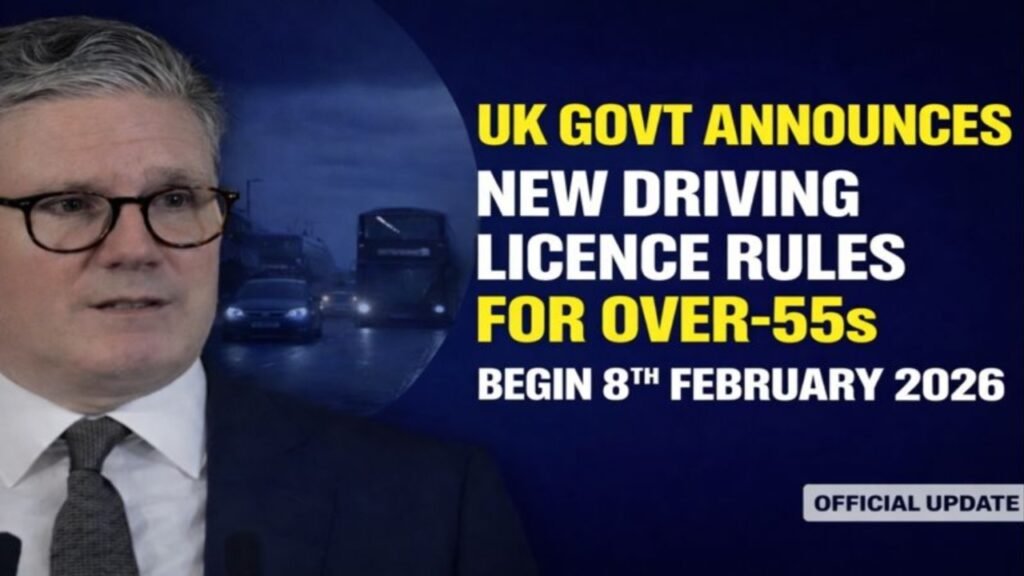
Hello Everyone, The UK Government has officially announced new driving licence rules for motorists aged over 55, set to take effect from 8th February 2026. This update has quickly gained attention across the country, especially among older drivers who rely on personal transport for independence, work, and daily life. While the changes are not a blanket ban, they do introduce revised requirements aimed at improving road safety. Understanding these rules early is essential, as they may affect licence renewals, medical checks, and driving responsibilities for millions of UK residents.
Why the Government Introduced These Rules
Road safety has been a growing focus for UK authorities over recent years, particularly as the population continues to age. Statistics show that while older drivers are often more cautious, certain age-related health conditions can increase risk if left unmanaged. The government says these changes are preventative rather than punitive. The aim is to ensure that drivers over 55 remain fit to drive while also reducing avoidable accidents. Officials have stressed that the new rules are about assessment, not age discrimination.
Who Will Be Affected
The new driving licence rules apply to drivers aged 55 and above across England, Scotland, and Wales. Northern Ireland is expected to follow similar guidance, though timelines may differ slightly. Importantly, these rules do not automatically remove anyone’s right to drive. Instead, they introduce updated checks at certain points in the licence cycle. Drivers who are healthy and meet the requirements will continue driving as normal. However, those with specific medical conditions may need additional documentation.
Key Changes Starting 8th February 2026
From the announced date, several procedural updates will come into force. These changes mainly relate to licence renewals, medical declarations, and monitoring responsibilities.
- Revised self-declaration forms focusing on vision, reaction time, and long-term conditions
- Possible requirement for GP or optician confirmation in specific cases
- Increased emphasis on honest reporting rather than automatic testing
These steps are designed to identify risks early while avoiding unnecessary testing for healthy drivers.
Medical Declarations Explained
Medical declarations are not new, but under the updated rules, they carry greater importance. Drivers over 55 will be expected to take extra care when completing health forms during renewal. Conditions such as diabetes, heart problems, neurological disorders, or eyesight issues must be clearly disclosed. The government has stated that failure to provide accurate information could result in penalties if an accident occurs. However, declaring a condition does not automatically mean licence withdrawal; many drivers will simply be monitored.
Vision and Eyesight Requirements
Good eyesight is essential for safe driving, and the updated rules reinforce existing standards rather than replacing them. Drivers must continue to meet the legal eyesight requirement, including the ability to read a number plate from the correct distance. For some drivers, especially those with known eye conditions, confirmation from an optician may be requested. Regular eye tests are strongly encouraged. The government believes early detection of vision changes will help drivers stay on the road longer and more safely.
Will There Be Driving Tests?
One of the biggest concerns among older drivers is whether mandatory retesting will be introduced. At present, the government has confirmed there will be no automatic driving tests based solely on age. However, in specific situations—such as medical referrals or concerns raised by healthcare professionals—further assessment may be required. These assessments are expected to be practical and proportionate. Officials emphasise that most drivers will never be asked to take a test if they remain fit and safe.
How Licence Renewal May Change
Licence renewal procedures for over-55s will remain familiar, but with added checks. The DVLA plans to make the process clearer and more supportive, with improved guidance and online tools. Renewal reminders will highlight medical responsibilities more prominently. Paper options will remain available for those who prefer them. The government has said it wants to reduce confusion and ensure older drivers understand exactly what is required, without creating unnecessary stress or bureaucracy.
What Happens If You Don’t Meet the Criteria
If a driver does not meet the required standards, the outcome will depend on individual circumstances. In many cases, temporary restrictions may be applied rather than a full licence withdrawal. Some drivers may be asked to limit driving to daylight hours or local areas. Others may be advised to undergo treatment or monitoring before a decision is made. The focus is on keeping people mobile where possible, while prioritising public safety.
Rights and Appeals for Drivers
Drivers who disagree with a decision will retain the right to appeal. The government has confirmed that clear appeal routes will remain in place through the DVLA and, if necessary, independent medical review. Support organisations and motoring groups have welcomed this reassurance. They stress that transparency and fairness are vital to maintaining trust. Drivers are encouraged to keep medical records up to date and seek professional advice if they are unsure about their situation.
Practical Steps Drivers Should Take Now
Although the rules begin in February 2026, drivers can prepare well in advance by taking sensible steps.
- Book regular eye tests and GP check-ups
- Keep a personal record of medical conditions and treatments
- Read DVLA guidance carefully before renewal
These actions can reduce anxiety and help ensure a smooth transition when the new rules take effect.
Public Reaction and Expert Views
Reaction across the UK has been mixed but largely measured. Many road safety experts support the changes, arguing they strike a balance between independence and responsibility. Some older drivers have expressed concern about added paperwork, while others welcome clearer guidance. Motoring organisations have called for strong communication to avoid misinformation. Overall, experts agree that how the rules are implemented will matter just as much as the rules themselves.
Conclusion
The new UK driving licence rules for over-55s, starting 8th February 2026, represent a shift towards proactive road safety rather than age-based restriction. By focusing on health awareness, honest self-declaration, and proportionate checks, the government aims to keep roads safer while respecting personal independence. For most drivers, daily life will continue unchanged. Staying informed, prepared, and proactive will be the key to navigating these updates with confidence.
Disclaimer: This article is for general information only and is based on publicly announced government guidance available at the time of writing. Driving licence rules may change, and individual circumstances can vary. Readers should always refer to official DVLA or UK Government sources, or seek professional advice, before making decisions related to driving eligibility or licence renewal.