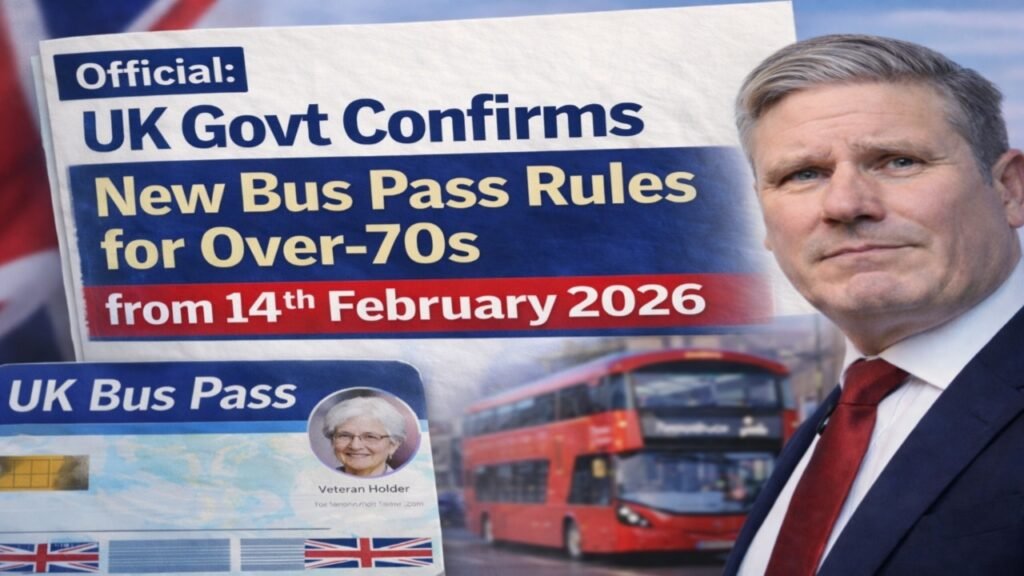
Hello Everyone, The UK Government has officially confirmed new bus pass rules for residents aged over 70, set to take effect from 14th February 2026. This update has sparked widespread interest among older citizens who rely on concessionary travel for daily mobility, social connection, and independence. The changes aim to modernise the existing scheme while ensuring it remains financially sustainable for local councils. For many pensioners, free bus travel is more than a benefit—it is a lifeline. Understanding what is changing, who is affected, and how to prepare is now essential.
Why the Rules Are Changing
According to official statements, the bus pass system is being updated to reflect changing travel patterns and rising operational costs across the UK. Local authorities have reported increased pressure on transport budgets, particularly in rural and semi-urban areas. The Government says these adjustments are designed to protect the scheme long-term rather than reduce support. By refining eligibility conditions and usage timings, officials believe the system can continue serving those who depend on it most, while keeping public transport services reliable and accessible.
Who Will Be Affected
The new rules specifically apply to UK residents aged 70 and above who currently hold or plan to apply for an older person’s bus pass. Existing pass holders will not lose access overnight, but certain conditions around usage and renewal may change. People approaching their 70th birthday in early 2026 should pay particular attention to the updated criteria. Importantly, the changes apply across England, although Scotland, Wales, and Northern Ireland may introduce slightly different arrangements under devolved powers.
Start Date Confirmed
The confirmed start date for the new rules is 14th February 2026. Any applications, renewals, or usage from this date onward will fall under the updated framework. Passes issued before this date will remain valid until their expiry, giving current holders time to adjust. Transport authorities have stated that there will be a transition period to minimise confusion. However, travellers are encouraged not to wait until the last minute and to check their local council guidance well in advance.
Key Rule Updates
Under the new framework, some conditions around when and how the bus pass can be used will be clarified. While free travel remains protected, certain peak-time restrictions may be enforced more consistently across regions. The Government has stressed that these changes are not about removing benefits, but about standardising them nationwide. This should reduce regional confusion and ensure fairness, particularly for older residents who travel across council boundaries for healthcare or family reasons.
What Stays the Same
Despite rumours online, the Government has confirmed that free off-peak bus travel for over-70s is not being scrapped. The core benefit remains intact, and there are no new charges being introduced for standard journeys. Pass holders will still be able to use local bus services without payment during eligible hours. This reassurance is crucial for pensioners on fixed incomes who depend on public transport to manage everyday expenses and maintain an active, independent lifestyle.
Usage Guidelines
The updated rules also include clearer guidance on acceptable usage to prevent misuse and confusion. Transport operators have requested better alignment between councils to ensure drivers and passengers follow the same standards everywhere. Under the new guidelines:
- Passes must be used only by the named holder, with stricter identity checks possible
- Valid travel hours will be clearly displayed on official council websites
- Misuse may result in temporary suspension rather than immediate cancellation
These steps aim to protect genuine users while keeping the system fair.
Renewal Process
From 2026, the renewal process for over-70 bus passes will become more streamlined, with a stronger push towards digital reminders. Councils will still offer paper-based options for those who prefer them. Applicants may be asked to reconfirm residency and age details more regularly. This is intended to keep records accurate and reduce administrative delays. While some may see this as extra paperwork, officials argue it will lead to faster processing and fewer errors in the long run.
Impact on Rural Areas
Rural communities have raised concerns about how the new rules might affect limited bus services. The Government has acknowledged these worries and stated that additional funding discussions are ongoing with councils serving remote areas. For many older residents outside major cities, buses are the only affordable transport option. Officials insist that protecting access in rural regions is a priority and that no area should be disproportionately affected by the changes coming into force in February 2026.
Health and Social Benefits
Free bus travel plays a vital role in supporting physical and mental wellbeing among older people. Regular outings help reduce loneliness, encourage movement, and maintain independence. The Government has referenced these benefits in its justification for preserving the core scheme. By refining rather than removing the bus pass, policymakers aim to continue supporting healthier ageing across the UK. Charities representing older people have cautiously welcomed the changes, provided accessibility remains central.
What You Should Do Now
Although the rules start in 2026, preparation now can prevent stress later. Checking your current pass expiry date and keeping personal details up to date with your council is a sensible first step. Recommended actions include:
- Visiting your local council website for early guidance
- Signing up for renewal alerts if available
- Keeping proof of age and address documents accessible
Taking these steps early will ensure a smooth transition.
Avoiding Misinformation
Social media has been filled with exaggerated claims about bus passes being cancelled altogether. The Government has urged citizens to rely only on official council notices and trusted news sources. Misinformation can cause unnecessary worry, especially among older people. If in doubt, contacting your local authority directly is the safest way to get accurate information. Clear communication will become increasingly important as the February 2026 start date approaches.
Regional Differences
While the headline rules apply across England, some local variations will remain. Councils may still decide specific operational details such as additional concessions or local service coverage. Devolved administrations in Scotland, Wales, and Northern Ireland will announce their own aligned updates separately. Travellers who frequently cross borders should stay informed about regional differences to avoid confusion when using their pass outside their home area.
Public Reaction So Far
Initial reactions have been mixed but largely measured. Many over-70s welcome the reassurance that free travel is staying, while others are cautious about tighter controls. Transport groups have supported the move towards consistency, saying it will make enforcement fairer. Advocacy organisations continue to monitor the rollout to ensure vulnerable groups are not disadvantaged. Overall, the focus remains on balance—protecting benefits while managing costs responsibly.
Conclusion
The UK Government’s confirmation of new bus pass rules for over-70s from 14th February 2026 marks an important update rather than a withdrawal of support. Free bus travel remains a protected benefit, with changes aimed at clarity, fairness, and long-term sustainability. By staying informed and preparing early, older residents can continue to enjoy the independence and freedom that concessionary travel provides across the UK.
Disclaimer: This article is for general information purposes only and is based on officially available announcements at the time of writing. Rules and local implementation may vary by council or region. Readers are advised to check with their local authority or official government sources for the most accurate and up-to-date guidance.