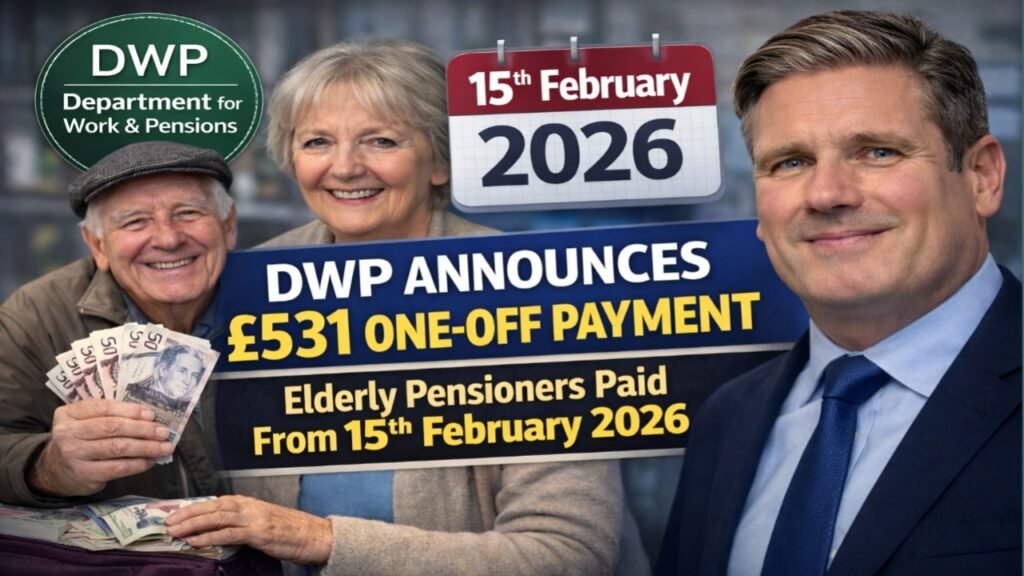
Hello Everyone, The Department for Work and Pensions has announced a £531 one-off payment aimed at supporting elderly pensioners across the UK. With the rising cost of essentials such as food, heating, and council tax, many older households continue to feel financial pressure. This payment, scheduled to begin from 15th February 2026, is designed to provide short-term relief rather than long-term income replacement. While the announcement has been welcomed, many pensioners are still unclear about eligibility, payment dates, and whether they need to apply. This article explains the update in simple, clear terms.
Why This Payment Matters
For many elderly pensioners, winter months bring higher expenses and tighter budgets. Energy bills often peak, and everyday costs can stretch fixed incomes. The £531 one-off payment is intended to help ease this pressure during a critical period. Although it is not a permanent increase, it can help cover urgent expenses such as heating, groceries, or medical costs. Understanding how and when this payment arrives is important so pensioners can plan their finances without unnecessary worry or confusion.
Official Announcement
The DWP has confirmed that this payment will be issued as a single, non-repayable amount. It is separate from the State Pension and will not replace any existing benefit. According to the announcement, payments are expected to start from mid-February 2026, with most eligible pensioners receiving the money automatically. The aim is to provide targeted support without creating additional administrative pressure for older people who may struggle with complex application processes.
Who Is Eligible
Eligibility for the £531 payment is based on pensioner status and existing benefit records held by the DWP. In most cases, individuals already receiving the State Pension or certain pension-related benefits will be considered automatically. The payment focuses on elderly pensioners who are more likely to face financial strain due to age-related living costs. Exact eligibility details are expected to follow official guidance, but the DWP has stressed that the payment is targeted rather than universal.
Age Criteria
The payment is primarily aimed at elderly pensioners, generally those who have reached State Pension age. While no upper age limit has been highlighted, the focus is on older households with limited income flexibility. The DWP uses existing data to identify eligible recipients, reducing the need for manual checks. Pensioners who recently reached pension age may also qualify, depending on their benefit status during the qualifying period set by the department.
Payment Amount Explained
The £531 figure has been set as a one-off support amount rather than a monthly or annual increase. It is intended to make a noticeable difference without altering long-term benefit structures. This amount may help cover several weeks of essential expenses for many pensioners. Importantly, the payment is not taxable and does not count as income for means-tested benefits, ensuring it does not negatively affect other financial support.
Payment Date
Payments are scheduled to begin from 15th February 2026. Not everyone will receive the money on the same day, as payments are usually rolled out over a period of time. The DWP has advised pensioners to allow several working days for the money to appear in their bank account. Those who receive benefits by post may experience slightly longer waiting times compared to direct bank transfers.
How It Will Be Paid
The DWP plans to use existing payment methods to deliver the £531 support.
- Most pensioners will receive the payment directly into their bank account
- No separate application is expected for eligible individuals
- Payment references may differ from regular pension descriptions
Using existing systems helps ensure faster delivery and reduces the risk of delays caused by paperwork or verification issues.
No Application Needed
One of the most reassuring aspects of this payment is that most pensioners will not need to apply. The DWP has confirmed that eligibility will be assessed automatically using current benefit records. This is particularly important for elderly individuals who may find online forms or phone processes challenging. However, pensioners are advised to ensure their personal and banking details are up to date to avoid any avoidable delays.
Impact on Other Benefits
The £531 payment will not affect other benefits such as Pension Credit, Housing Benefit, or Council Tax Reduction. It is classified as a one-off support payment rather than regular income. This ensures pensioners do not lose existing help as a result of receiving the money. The DWP has emphasised that the payment is designed to support, not complicate, the current benefit system.
Pension Credit Link
Pensioners receiving Pension Credit are among those most likely to benefit from this payment. Pension Credit already supports low-income pensioners, and the additional £531 can provide further relief. The announcement may also encourage eligible pensioners who are not currently claiming Pension Credit to check their entitlement, as doing so can unlock access to additional support schemes.
Common Questions
Many pensioners and families have raised similar concerns following the announcement.
- Will I need to contact the DWP?
- What if my payment does not arrive on time?
- Does this affect my State Pension?
The DWP has advised waiting until the end of the payment window before making enquiries, as staggered payments are normal.
Avoiding Scams
Whenever financial support is announced, scam attempts often increase. Pensioners should be cautious of unexpected calls, texts, or emails claiming to help “release” the £531 payment. The DWP will not ask for bank details via unsolicited contact. Payments are automatic, and no fee is required. Staying alert helps protect elderly individuals from fraud during payment periods.
Cost of Living Context
This payment comes against a backdrop of continued cost-of-living challenges in the UK. While inflation may fluctuate, older people often feel its effects more strongly due to fixed incomes. The £531 payment is part of a broader approach to provide targeted assistance rather than across-the-board increases. Although temporary, it acknowledges the financial pressure many pensioners continue to face.
Public Reaction
Initial reactions to the announcement have been mixed. Many pensioners welcome the support, while others question whether a one-off payment goes far enough. Charities supporting older people have highlighted that while helpful, long-term solutions are still needed. Nonetheless, the payment offers immediate relief at a time when many households are carefully managing every pound.
What Pensioners Should Do
At this stage, most pensioners simply need to wait and monitor their bank accounts from mid-February.
- Check bank details are correct with the DWP
- Keep official letters for reference
- Avoid responding to unofficial payment messages
Being informed and cautious ensures the payment process remains smooth and stress-free.
Conclusion
The £531 one-off payment announced by the DWP provides timely financial support for elderly pensioners across the UK. Starting from 15th February 2026, it aims to ease short-term cost pressures without affecting existing benefits. While not a permanent solution, it offers reassurance during a challenging period. Staying informed and alert will help pensioners receive the payment smoothly and safely.
Disclaimer: This article is for general information purposes only and does not constitute financial or legal advice. Payment details, eligibility criteria, and dates may change based on official DWP guidance. Readers are advised to consult official UK government sources or seek professional advice for personal circumstances and benefit-related decisions.