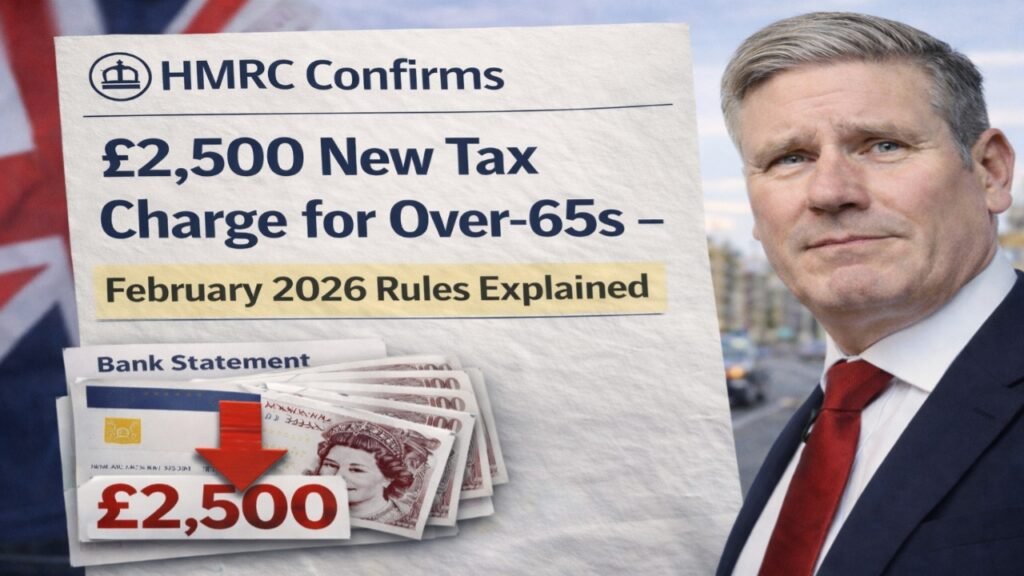
Hello Everyone, The UK tax landscape is shifting once again, and this time, the spotlight is firmly on the older generation. As of February 2026, HM Revenue and Customs (HMRC) has implemented specific adjustments that could see many over-65s facing an unexpected tax bill. While the “£2,500 charge” has been circulating in headlines, understanding the mechanics behind this figure is essential for effective financial planning. It isn’t a flat “senior citizen tax,” but rather a cumulative result of frozen thresholds and shifting pension withdrawal rules.
For many retirees, the dream of a quiet life is being interrupted by the reality of fiscal drag. As inflation pushes state and private pensions higher, the tax brackets have remained stubbornly static. This creates a “perfect storm” where more people are pulled into the tax net for the first time in their lives. This guide breaks down exactly what is happening this month and how you can navigate these changes without losing a significant chunk of your retirement nest egg.
The February 2026 Shift
The primary driver behind the new £2,500 liability is the combination of the Triple Lock pension increase and the continued freeze on the Personal Allowance. For the 2025/26 tax year, the State Pension has risen significantly to keep pace with previous inflation. However, because the threshold at which you start paying Income Tax remains at £12,570, a much larger portion of your total income—including private pensions and savings interest—is now taxable.
HMRC’s new data suggests that a typical retiree with a full State Pension and a modest private annuity will now find themselves crossing into the 20% tax bracket more aggressively. The “£2,500 charge” refers to the estimated average increase in annual tax liability for those with mid-tier retirement incomes who previously sat just below the threshold. It is a sharp reminder that “tax-free” retirement is becoming a thing of the past for the UK’s aging population.
Why Over-65s are Targeted
It is important to clarify that HMRC is not “targeting” pensioners with a specific penalty. Instead, the current economic policy relies on fiscal drag. By not raising tax-free limits while incomes rise, the government effectively increases tax revenue without technically raising the headline tax rate. For over-65s, this is particularly painful because their income sources are often fixed or tied to inflation-adjusted benchmarks like the Triple Lock, leaving little room for maneuver.
Furthermore, many individuals in this age bracket are now seeing the impact of the Lump Sum Allowance (LSA) changes. With the lifetime allowance abolished, the new rules regarding how much you can take tax-free from your pension pot are strictly monitored. If you exceed these limits or withdraw large sums to help grandchildren with house deposits, you might trigger the higher tax charges that HMRC is now actively collecting through the updated PAYE system.
The Digital Transformation of HMRC Oversight
As part of the 2026 fiscal rollout, HMRC has deployed enhanced AI-driven software designed to cross-reference bank interest and pension data in real-time. This digital shift means that discrepancies in declared income are identified almost instantly, rather than at the end of the tax year. For the over-65 demographic, this necessitates a higher degree of vigilance regarding online tax accounts. The government is encouraging seniors to utilize the ‘Check your Income Tax’ service regularly to ensure their personal data matches the records held by financial institutions. This modernization aims to reduce the “tax gap” but also places a greater administrative burden on retirees to manage their digital footprints effectively to avoid automated penalties.
Impact on State Pensions
The State Pension is the bedrock of retirement, but it is also the primary reason many are now facing these bills. With the full new State Pension now hovering very close to the £12,570 Personal Allowance, even a tiny amount of additional income—be it a small part-time job or a tiny workplace pension—is enough to trigger a tax demand. HMRC has streamlined its “Simple Assessment” process to ensure these payments are collected efficiently.
- Frozen Thresholds: The Personal Allowance has not moved, despite significant inflation over the last three years.
- Triple Lock Effects: While the pension increase is welcome, it pushes your total income closer to the taxable limit.
- Automatic Collection: HMRC is using real-time data to adjust tax codes, meaning many will see their monthly take-home drop.
- Savings Interest: The Personal Savings Allowance is also being breached more frequently as interest rates remain higher than in the previous decade.
Private Pensions and Drawdowns
For those who have diligently saved into a SIPP or a workplace pension, the February 2026 rules bring a new level of scrutiny to drawdowns. If you are taking more than your 25% tax-free lump sum, the remaining 75% is taxed as earned income. Because of the frozen bands, many over-65s are accidentally bumping themselves into the 40% Higher Rate bracket. This is where the £2,500 figure becomes a reality for many middle-income households.
Strategic planning is now more important than ever. Taking large lump sums in a single tax year can be a costly mistake. HMRC’s systems are now faster at identifying these “spike” incomes, often applying an emergency tax code that requires you to jump through hoops to claim back overpaid tax. To avoid the £2,500 hit, retirees are being urged to spread their withdrawals over several years or utilize ISAs, which remain a tax-efficient haven.
Navigating the New Tax Codes
Your tax code is the most powerful tool—or weapon—in your financial arsenal. Since the February 2026 update, HMRC has been issuing thousands of “K codes” to retirees. A K code signifies that your untaxed income is greater than your allowances. This usually happens when your State Pension (which is paid gross) is larger than your Personal Allowance, or when you have multiple income streams that aren’t being tracked under a single umbrella.
If you receive a letter from HMRC regarding a change in your tax code, do not ignore it. Check that they have accurately calculated your State Pension and any benefits you receive. Errors are common during major rule shifts, and being proactive can prevent an overcharge. Remember, the “£2,500 charge” is often a result of cumulative errors or underpayments from previous years being “recouped” all at once through your current pension payments.
How to Reduce the Burden
While the rules are strict, there are still legitimate ways to minimize the impact of these new charges. The UK tax system provides several allowances that often go under-utilized by the over-65 demographic. From marriage allowances to charitable donations, every bit helps in bringing your taxable income back below the higher thresholds. It requires a bit of “financial housekeeping” to ensure you aren’t paying more than your fair share to the Treasury.
- Marriage Allowance: If your spouse has an income below £12,570, they can transfer £1,260 of their allowance to you, saving up to £252 a year.
- ISA Contributions: Shift savings into ISAs to ensure the interest earned doesn’t count toward your taxable income total.
- Gift Aid: If you are a taxpayer, donating to charity can effectively increase your tax thresholds.
- Pension Recycling: Be careful not to breach recycling rules, but ensure you are utilizing your annual allowances correctly.
The Role of Savings Interest
In 2026, interest rates on savings accounts remain relatively attractive compared to the “zero-percent” era of the 2010s. While this is great for growth, it is a trap for tax. The Personal Savings Allowance (PSA) allows basic rate taxpayers to earn £1,000 in interest tax-free. However, if your pension income has already used up your Personal Allowance, any interest above that £1,000 is taxed at 20%.
For many over-65s who hold “rainy day” funds in standard high-street savings accounts, the interest alone is now triggering HMRC tax bills. This is a significant contributor to the £2,500 figure mentioned in the new rules. Moving these funds into a Cash ISA or a Premium Bond account (where winnings are tax-free) is one of the simplest ways to shield yourself from the February rule changes without losing access to your cash.
Looking Toward the Future
The 2026 fiscal year is likely a sign of things to come. With the UK’s national debt and public service costs rising, the “gray pound” is a natural source of revenue for the government. It is unlikely that we will see a significant rise in the Personal Allowance anytime soon. Therefore, the responsibility of tax efficiency has shifted from the state to the individual. Staying informed is no longer optional; it is a financial necessity.
As we move deeper into 2026, expect more updates regarding how the State Pension is treated. There are ongoing debates in Westminster about potentially decoupling the State Pension from the Income Tax system entirely, but until that happens, the current rules apply. Keep a close eye on your “Government Gateway” account online, as this is the fastest way to see what HMRC thinks you owe and why your tax code has changed.
Conclusion
The new £2,500 tax charge for over-65s isn’t a single bill, but a reflection of how the UK’s frozen tax system is catching up with rising pensions. By understanding that your State Pension, private drawdowns, and savings interest all work together, you can take steps to mitigate the damage. Whether it’s utilizing the Marriage Allowance or being more tactical with ISA transfers, the goal is to keep your hard-earned money in your pocket rather than handing it back to the taxman.
Disclaimer: This article is for informational purposes only and does not constitute professional financial or tax advice. Tax laws in the UK are subject to change, and individual circumstances vary. Always consult with a qualified financial advisor or contact HMRC directly before making significant changes to your pension or tax arrangements.